

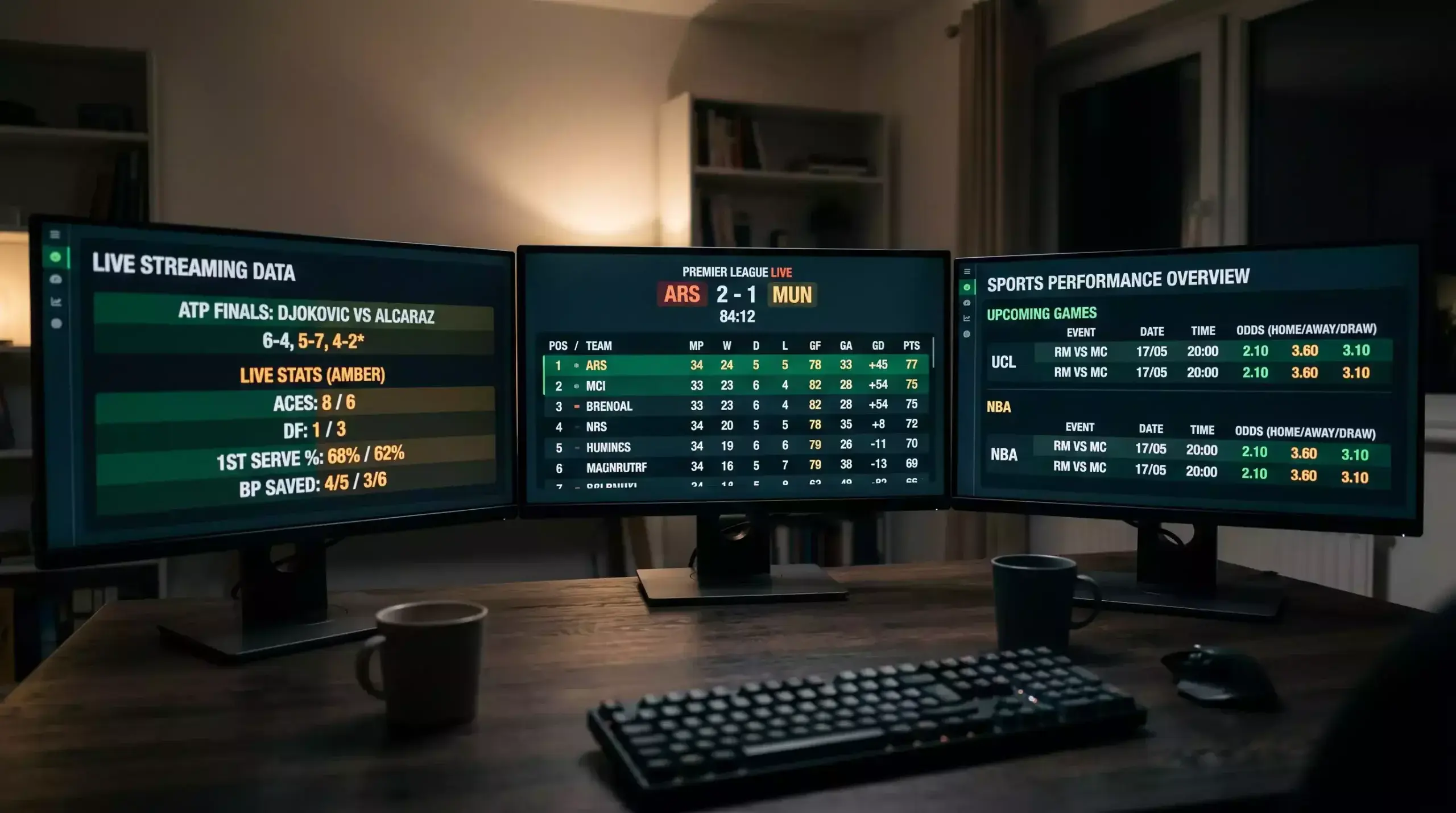
AI Adoption in On-Chain Sports Betting
Two years ago, when I first noticed my edge on certain on-chain MLB markets was shrinking, I assumed the market was simply maturing. Then I saw the data: AI-driven trading accounts for 48% of betting activity on major blockchain networks, up from 28% in 2024. The market had not matured in the traditional sense – it had been colonised by algorithms that process information faster, execute more consistently, and never tilt after a losing streak.
This is not a distant future scenario. It is the current state of the market. If you are placing bets on a decentralised sportsbook protocol, nearly half of the counterparty volume on the other side of your wager is coming from automated systems. These systems ingest real-time data feeds – pitch velocity, exit velocity, sprint speed, bullpen availability, weather conditions – and convert them into betting decisions in milliseconds. The human bettor watching a game on a 30-second-delayed stream is not competing on a level playing field.
The implications for retail MLB bettors are significant but not fatal. Understanding how AI operates in these markets – what it does well, where it has blind spots, and how you can coexist with it – is the difference between swimming against the current and finding the eddies where the current does not reach.
How AI Models Trade MLB Lines on Blockchain Platforms
The AI systems active in on-chain MLB markets are not chatbots or simple decision trees. They are sophisticated statistical models that combine historical data, real-time game state, and market microstructure analysis to identify and exploit pricing inefficiencies.
The typical architecture works like this. A base model projects the probability of each possible game outcome – win/loss, run total, player performance – using a combination of pre-game data (starting lineups, pitcher matchups, park factors) and in-game data (current score, pitch count, base-runner state). A second layer compares the model’s probability estimates to the current market odds, identifies discrepancies above a minimum threshold, and generates a recommended bet size using a Kelly criterion variant. A third layer handles execution – submitting the bet transaction to the blockchain, managing gas fees, and monitoring for confirmation.
The speed advantage is real but narrower than you might think. On a centralised sportsbook, the limiting factor for human bettors is the time to navigate the interface, select the bet, and confirm. On a blockchain protocol, the limiting factor is transaction confirmation time – even on a fast Layer 2 network, a bet transaction takes two to five seconds. AI systems are faster at the decision stage (milliseconds versus seconds for a human) but face the same blockchain latency for execution. The net advantage is measured in seconds, not minutes.
Where AI models genuinely dominate is consistency. A human bettor gets tired, bored, or distracted during the seventh game of a slow Tuesday slate. An algorithm processes every game with the same attention and the same discipline. Over a 162-game season with 10 to 15 games per day, that consistency compounds into a meaningful volume advantage that manual betting cannot match.
AI Fraud Detection in Crypto Sports Betting
AI is not just changing the betting side of the equation – it is reshaping the integrity infrastructure that underpins the entire market. The AI sports betting fraud detection market is projected to grow from $0.6 billion in 2025 to $3.2 billion by 2033, reflecting the scale of investment flowing into this space.
Fraud detection AI monitors betting patterns across platforms to identify anomalies that suggest match-fixing, insider information, or market manipulation. In MLB, the most common red flags include unusual betting volume on a low-profile game, coordinated sharp action across multiple platforms on a specific prop bet (suggesting insider knowledge of a lineup change or injury), and betting patterns that correlate with on-field events in ways that suggest advance knowledge.
For crypto sportsbooks, the transparency of blockchain transactions actually enhances fraud detection capability. Every bet on a decentralised protocol is permanently recorded on a public ledger, creating an immutable audit trail that centralised sportsbooks can only approximate through internal databases. Analysts can trace the origin of suspicious betting activity through wallet addresses, identify clusters of coordinated bets, and flag patterns for investigation – all without requiring the cooperation of the platform itself.
The irony is that the same transparency that enables fraud detection also enables the algorithmic trading that is reshaping the market. AI traders and AI monitors are engaged in an escalating arms race – each improvement in detection capability drives more sophisticated evasion techniques, which in turn drives more advanced detection. The net effect is a market that is simultaneously more surveilled and more algorithmically active than at any point in its history.
What AI Trading Means for Retail MLB Bettors
Here is the uncomfortable truth: AI is making certain crypto MLB betting strategies obsolete for retail bettors. If your edge depended on processing publicly available data faster than the market – scraping lineup cards, monitoring weather forecasts, tracking bullpen usage – that edge is now competed away on the platforms where AI is most active. The algorithms do the same work in a fraction of the time and with zero emotional interference.
But AI has blind spots, and those blind spots are where human bettors retain an advantage. The first is qualitative judgment. AI models struggle with intangibles – clubhouse dynamics, managerial tendencies in high-pressure situations, the impact of a trade-deadline acquisition on team morale. These factors are hard to quantify and therefore hard to model, but they influence outcomes in ways that statistical projections miss. A human who follows a team closely and understands its internal dynamics can identify situations where the model’s projection is wrong for reasons the model cannot see.
The second blind spot is small-market, low-liquidity games. AI trading is most profitable on markets with sufficient volume to absorb large bet sizes without moving the line. On a Tuesday afternoon game between two non-contending teams on a crypto sportsbook with thin liquidity, the AI systems may not even participate because the expected profit does not justify the execution cost. These games are where manual bettors face the least algorithmic competition.
The third blind spot is long-horizon bets. AI models optimise for short-term expected value – they are designed to exploit immediate mispricings and lock in profit quickly. Futures bets, season win totals, and award markets operate on timescales that most AI systems are not designed to trade. A human bettor who places a well-reasoned World Series futures bet in February is operating in a space that algorithmic competition has largely not reached.
My adaptation has been straightforward: I shifted my on-chain betting toward markets where AI activity is lowest (props on mid-lineup batters, first-five-innings totals on low-profile games, and futures) and I moved my high-frequency game-level betting to centralised crypto sportsbooks where the algorithmic competition is less intense. The AI revolution has not ended the viability of human MLB betting – it has narrowed the range of viable strategies and rewarded bettors who can identify and exploit the niches that algorithms overlook.
