

Volatility Risks in Crypto Sports Betting
I nearly lost control of my gambling during the 2020 MLB season – not because I was losing, but because I was winning and the crypto sportsbook made it effortless to keep going. No cooling-off period, no deposit friction, no human interaction between me and the next bet. The 24/7 availability of crypto platforms combined with instant deposits created a feedback loop that I only broke by deleting the app for a week and setting hard rules that I still follow today.
Andrew Rhodes, CEO of the UK Gambling Commission, described the illegal offshore market in unambiguous terms: there is nothing more exploitative than the illegal market. That assessment carries particular weight in the context of responsible gambling, because unlicensed crypto sportsbooks operate without the consumer protection infrastructure that UKGC-licensed operators must maintain. No mandatory deposit limits, no reality checks, no self-exclusion register. The bettor is entirely on their own.
Adult gambling participation in Great Britain sits at approximately 48%, a figure that has remained stable for years. But participation rates mask the spectrum of risk – the small percentage of participants who develop problematic behaviour carry a disproportionate share of harm. When crypto’s unique characteristics – pseudonymity, instant transactions, volatile asset values – intersect with the daily volume of a 162-game MLB season, the conditions for problematic gambling are amplified in ways that the traditional framework was not designed to address.
GamStop and Its Limitations for Offshore Crypto Platforms
GamStop is the UK’s national self-exclusion scheme. When you register, all UKGC-licensed gambling operators are required to prevent you from opening new accounts or placing bets for a minimum of six months. It is a powerful tool – and it is entirely irrelevant for crypto sportsbooks that operate without a UK licence.
The gap is not theoretical. A person who self-excludes through GamStop can, within minutes, create an account on an offshore crypto sportsbook, deposit Bitcoin, and resume betting. The sportsbook has no obligation to check GamStop, no mechanism to verify UK self-exclusion status, and no regulatory incentive to implement one. Tim Miller, the UKGC’s Executive Director, acknowledged this tension publicly when discussing the Commission’s meetings with Meta about “not on GamStop” sites – a phrase that has become a search category in its own right.
This limitation does not make GamStop useless. If your gambling is concentrated on licensed platforms, GamStop is effective and worth using. But if crypto sportsbooks are part of your betting activity, GamStop alone is insufficient. You need additional self-imposed controls – and the discipline to enforce them when the system will not.
When Crypto Volatility Amplifies Gambling Harm
The interaction between crypto price volatility and gambling behaviour is an underexplored risk that I see affecting bettors regularly, including people who otherwise consider themselves disciplined.
The mechanism is psychological. When Bitcoin surges, your sportsbook balance – denominated in BTC – suddenly represents more purchasing power. The temptation to increase bet sizes follows naturally: the money “feels” like a windfall rather than hard-earned capital. This perception shift leads to larger bets, lower selectivity, and a willingness to tolerate losses that would have triggered alarm signals at the previous price level. The reverse is equally dangerous – a Bitcoin crash can trigger desperation betting as the bettor tries to “recover” the lost fiat value of their bankroll through increasingly aggressive wagers.
Crypto gambling platforms attract peak engagement from users aged 25 to 34, representing roughly 40% of the active base, followed by the 35-to-44 demographic at about 35%. Both groups are deep enough into their earning years to sustain losses for longer than younger demographics, which can mask problematic patterns until the financial damage is severe.
The volatility-harm interaction is compounded by the absence of deposit friction on crypto platforms. On a licensed UK sportsbook, a bank transfer takes time, a credit card deposit is blocked by regulation, and even a debit card requires conscious re-engagement with the banking system. On a crypto sportsbook, moving funds from wallet to platform takes seconds. There is no natural pause between the impulse to gamble and the act of gambling – and that pause, however brief, is a critical circuit breaker for people experiencing difficulty controlling their behaviour.
Practical Harm-Reduction Steps for Crypto MLB Bettors
I am not going to pretend that telling you to “gamble responsibly” is sufficient. Here are the specific measures I use and recommend – each one learned through personal experience or from watching friends struggle.
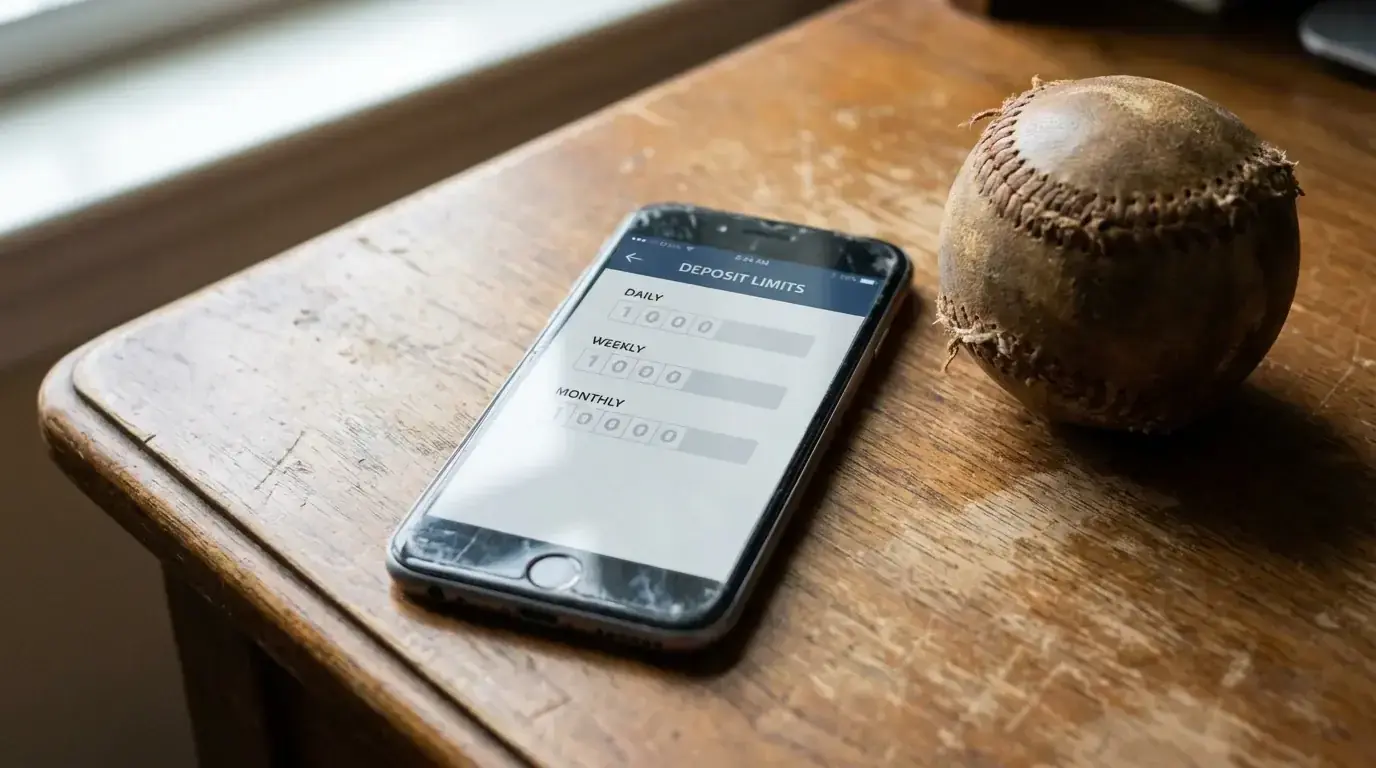
Set a hard daily loss limit before you open the sportsbook. Write it down. Physically. Not in a notes app on the same phone you bet from, but on a piece of paper pinned to your desk. When you hit the limit, close the app. The MLB season has 2,430 regular-season games plus the postseason – there is no urgency to any individual day’s action.
Separate your betting wallet from your investment wallet. Keep only the funds you intend to bet with on the sportsbook or in a dedicated hot wallet. The rest stays in cold storage or a separate exchange account that requires deliberate effort to access. Creating friction between your long-term crypto holdings and your betting activity is the single most effective structural protection you can implement.
Track your results in fiat terms, reviewed weekly. If you only track in BTC, a losing month can be invisible during a Bitcoin rally – your balance looks stable even though you are haemorrhaging value. Weekly fiat-denominated review forces honesty about your actual performance and makes it harder to rationalise continued betting during a losing streak.
Talk to someone. If you notice that you are thinking about your next MLB bet more than you are thinking about the game itself, or if you are betting to recover losses rather than to exploit edges, those are warning signs. The National Gambling Helpline (0808 8020 133) is free, confidential, and available 24 hours a day. GamCare provides online chat and counselling services. Neither requires you to be in crisis before reaching out – and using them early is always better than using them late.
One final measure that has made a material difference for me: I do not bet on MLB during September. By then, the regular season is winding down, the playoff race creates emotional volatility, and the temptation to chase full-season targets gets dangerous. I close the season in August, review my results, and return fresh for the following year. The lost betting opportunities are real, but the mental reset is worth more.
